Showing posts with label exhibition. Show all posts

Wednesday, October 26, 2016

8 July ’47

Imagine, New Zealand has not one but at least two artists devoted to UFOs. Ronnie van Hout, of course, has been a longtime believer in the Alien presence and has made many works around the theme but Peter Stichbury is also on the case. His exhibition currently at the Nevada Museum of Art in Reno continues his exploration of the abducted and the craft that come all that way to do the deed.

Van Hout and Stichbury are of course joined by a long list of other artists with the same fascination with what is out there. A quick search found Austrian artist Valie Export’s 1970s film Invisible Adversaries. Succinctly described by Amy Taubin ‘as if Godard were reincarnated as a woman and decided to make a feminist version of The Invasion of the Body Snatchers’ it’s become that most sought-after thing: a cult classic (you can watch it here on ubu.com). Then there’s Keith Haring’s long-time obsession with UFOs, an Australian collective called Greatest Hits (Gavin Bell, Jarrah de Kuijer & Simon McGlinn) who exhibited an alien ice sculpture, Mariko Mori’s Wave UFO environment and Subodh Gupta’s pots and pans delivery.

And just in case you think the current Presidential election is spacey and getting spacier, this declaration from Jimmy Carter during his (successful) Presidential campaign puts it all in perspective, ‘If I become President, I'll make every piece of information this country has about UFO sightings available to the public and  the scientists. I am convinced that UFOs exist because I have seen one.’

Images: top to bottom left to right, Peter Stichbury, Ronnie van Hout, Keith Haring, Greatest Hits, Subodh Gupta, Mariko Mori and a still from Valie Export’s film

Wednesday, October 12, 2016

Somebody

Derek Cowie was lost and then he was found again and then he was lost and now he’s back in New Zealand. In the eighties Cowie was toWellington what the mountains were to The Sound of Music. Curator Robert Leonard loved his work and in 1989 famously placed it centrally in the Shed 11 exhibition Nobodies. A couple of months ago you could have picked up a three square meters plus painting from this time at the Tim and Sherrah Francis auction. They were fans too. And now a new wave of Cowie enthusiasm has been triggered by an exhibition that opened in Wellington last night. Yes, he's back showing in Wellington but not at Peter McLeavey this time round but at Page Blackie. It’s an eclectic mix of materials and styles with Cowie’s theatricality underpinning it all. With old school charm he was keen to assure everyone this was only a starter with the main show scheduled for May. This time it looks like Derek Cowie is not going away.

Image: Derek Cowie at his Page Blackie opening

Thursday, August 11, 2016

Outstanding

The discipline of marketing has found a welcoming home in the art museum world. Relentlessly positive and unabashedly promotional, museum communications sometimes feel as though the clock has been turned back to the excitable 1990s. Take a recent announcement for an upcoming exhibition by Christchurch’s CoCA. For what's basically another local show (it's titled Contemporary Christchurch) the 148-word announcement has managed to squeeze in 10 superlatives to remind us how to respond:

excited
celebration
innovative
vibrancy
stimulating
creative
lively
inspiring
innovative
amazing

How incredible is that?

Tuesday, July 19, 2016

One day in the director’s office

Director: I’m alarmed. We really do need to wake up our ideas and raise the bar.

Staff: We could make better shows...

D: Don’t be facetious. I mean pumping up our attendance figures.

S Better shows?

D: Yes, yes, very amusing …. I get it. We need something that will attract a completely different breed of punter. It’s the Trump thing. I’m thinking ....oh, I don't know... body builders or the craft-a-noon crowd or maybe, just maybe, the God Squad - they usually give us a miss.

S: We could dust off Michelangelo for them.

D: I don’t need another DWM what I’m after is - Michelangelo …the…the… WOMAN.

S: Woman plus God plus Art? .. that’s a challenge. (brightly) How about that singing nun?...

D: A nun? .... did you say nun? ...why didn’t I think of that? … a nun (quietly hums to himself ‘Dominique, inique. inique s'en allait tout simplement. Routier pauvre et chantant’).

S: I was joking…please tell me you’re not thinking of going with a singing nun… aren’t we supposed to be about the visual arts?

D: (ignoring him) Now if we go with my nun idea it’s going to have to really pop. (thinks) …POP! ….. I’ve done it again! We’ll show that Pop Art Nun, what’s–her-name.

S: Pop Art Nun?

D: (on a roll) The Great Pop Artist nun Sister Thingumy. I can see the poster already. “GOD ALMIGHTY…IT’S POP ART! “

S: But she isn’t a Pop artist.

D: Of course she is, everyone says so … PURE POP.

S: But she’s selling God. Warhol wasn’t making work to sell Brillo, Lichtenstein wasn’t shilling comics, Rosenquist wasn’t flogging F111 Bombers on commission.

D: You’re splitting hairs. …. A Pop Art Nun … holy shit…we need to get onto this right away.

And that is what they did.

Friday, July 15, 2016

When life follows art.


BREXIT

Image:  A study attributed to Benjamin West of the two delegations at the Treaty of Paris that ended the American Revolutionary War in 1783. After much hard bargaining, representatives of King George III of Great Britain and representatives of the United States of America agreed on conditions that were considered exceedingly generous to the US. The British delegation refused to pose for West’s painting and it was never completed. It is currently hanging in The Met Breuer in New York as part of the exhibition Unfinished.

Thursday, June 23, 2016

Chocolate, cuckoo clocks and curated art

For most of the sixties and seventies (and, let’s face it, the eighties too) if people in NZ involved with art wanted to go overseas to try things out they headed for the UK. More recently this Brexit has diversified reaching out to Australia, the US and Europe with a small contingent getting to Asia. Throughout Europe these days you can pretty much find an NZ artist or writer or curator in every port. 

Over the years we've mentioned some of our connections in Europe - people like Ruth Buchanan, Simon Denny, Alicia Frankovich, Richard Frater, Daniel Malone, Michael Stevenson - but hundreds more have now established themselves for the long-term - on the Continent, as we used to call it. 

So in Zurich we caught the number 31 bus out of the city centre and went off to visit Matt Hanson. He’s one of a new wave whose transplantation has been made possible by educational opportunities. With fellow curator Ludovica Parenti he has made an exhibition space by converting an apartment (as in mattress-stored-in-the-kitchen during the day converted) with a pink front door, pristine white walls and a very pale mint (or is it washed-out avocado?) floor. Their exhibition The buttocks of a steel mill includes Robert Ashley’s opera for TV Perfect lives and a poem of complex rhythm and wordplay by Australian Astrid Lorange. The internet claims Perfect lives as a comic opera about reincarnation and it’s inspiring to imagine the meeting at BBC4 back in 1984 when director John Sanborn got the go-ahead to produce it. 

One window of the Hanson apartment gallery space overlooks an idyllic park-like courtyard while the other confronts a motorway on-ramp. We got through our whole encounter without once saying ‘nature/culture’ #sophisticated.

Images: Top, curator Matt Hanson. Bottom left, Astrid Lorange and right (on the screen) Perfect lives. You can read Lorange’s poem here and view Perfect lives here.

Thursday, June 02, 2016

It’s a small world after all

NZ’s having a moment in Berlin. There’s Simon Denny in the Berlin Biennale opening at the end of the week and a group show just launched at ifa galleries in the toney part of Mitte. Ifa fronts one of those amorphous government organisations that’s all about ‘peaceful and enriching coexistence between people and cultures worldwide.’ The NZ artists Leonie Hutchison, Natalie Robinson, Peter Robinson and Kalisolaite ‘Uhil occupy a couple of spacious brightly painted galleries along with Berlin-based Gabriel Rossell-Santillán, the peripatetic Daniel Maier-Reimer and an Indonesian collective. The exhibition is titled Politics of sharing – on collective wisdom. It's branded as promoting ‘important current questions', ‘new ways to share from the Maori’ and defining ‘the gallery space as a Marae’. That sort of thing. Pretty earnest, although Robinson peps it up by felt bombing the place and, as we saw last night, bits of Berlin.

Images Peter Robinson in the Ifa exhibition and, bottom right outside via an enthusiastic 'participating' visitor

Tuesday, May 10, 2016

What’s in that crate?

This crate was one of many we saw arranged around the huge, light empty gallery spaces of MUAC (the contemporary art museum of the University of Mexico). They contained the Anish Kapoor exhibition Archaeology, Biology that was in the process of being installed. The many labels on this single crate can  show us something of the reach and value of Kapoor's work. First we could see that it contained his sculpture Large blue void from 1989. This particular crate had come from Lisson Gallery in London who have represented Kapoor since 1982. It was built by Mtec, a specialist art transport and shipping company based in the UK who, incidentally, have a very cool website. The head office is located at what seems to be the stereotypically English address of 10 Gentlemens Field, but this is only one of a number of units, there are 23 works in the exhibition. This is a big operation. At some stage the crate was under the care of Martinspeed, another specialist art transport firm in the UK. The shipment was one of four crates and weighs 474 kilograms and has the entire sculpture in it. Well, we found it interesting anyway.

Images: top the crate and below all the markings on one side.

Tuesday, February 16, 2016

Distraction

It’s not often one of NZ's public art museums goes …um…public with a point of view on contemporary art but Natasha Conland has given it a good go. She has stepped out with a 20-strong selection of painters in her exhibition Necessary Distraction. It's designed to explore the question, ‘What can painting offer that other art forms cannot?’ There's been some critical writing on the exhibition (The Pantograph Punch and EyeContact) but we were also particularly interested in what this very large contemporary show might say about Chartwell and the Auckland Art Gallery as collectors. Of course as the Chartwell collection is on long-term loan to Auckland Art Gallery but how this relationship plays out is of special interest to the representation of contemporary art.

Some numbers around Necessary Distraction:

Gender
55 percent of the artists are women

Age
The average age of all the artists is 42 with 25 percent of them over the age of 50
The average age of the women is 46 and of the men 41
4 of the women are over 50 years old, 2 are over 50 and one is over 70
2 of the men are over 50
Of the artists under 40, 5 of them are women and 4 of them are men

Representation
25 percent are represented by Hopkinson Mossman
15 percent by Ivan Anthony
10 percent by Michael Lett
10 percent by Anna Miles
10 percent by Gow Langsford 

30 percent by six different dealers.

Collections
Chartwell has bought work by 50 percent of the artists in the exhibition and has 47 paintings by them

The Auckland Art Gallery has works by 20 percent of the artists in Necessary Distraction with 15 paintings by them in its collection


40 percent of the artists in Necessary Distraction have no works in the collections of either the Auckland Art Gallery or Chartwell

The painter in Necessary Distraction with the most works in the two collections is Simon Ingram with 12 in Chartwell but none in the Auckland Art Gallery collection. Next is Dan Arps with 8 works in Chartwell and again none in the Auckland Art Gallery collection

Two artists (Barbara Tuck and Saskia Leek) are represented in the Auckland Art Gallery Collection but not in Chartwell. Eight artists are represented in the Chartwell collection but have not been collected by the Auckland Art Gallery collection (Dan Arps, Andrew Barber, Stella Corkery, Simon Ingram, Patrick Lundberg, Oliver Perkins, Kim Pieters and Jeena Shin).

Wednesday, February 03, 2016

Let one thousand garden gnomes bloom

In the eighties there was a game played by art gallery people called ‘One thousand gnomes’. A popular theory at the time (and this probably still holds good) was that one gnome was unexhibitable, one hundred gnomes was impressive but no more, one thousand gnomes on the other hand…. From that starting point the game was to devise the title of an exhibition of 1000 Gnomes that captured the styles of the various institutions around the country. This set (via a dot-matrix printer!) turned up the other day. It says a lot about the times. Some of the art institutions have since changed their names, but you get the idea.

Auckland Art Gallery
GNOME

Manawatu Art Gallery
Gnomes: methods and materials

Sarjeant Gallery
Gnomes - a survey exhibition

Govett-Brewster Art Gallery
The Gnome Project

National Art Gallery
Gnome / Gnomic

Dowse Art Gallery
Gnomes: a celebration

Bishop Suter Art Gallery
1000 Nelson Gnomes

Robert McDougall Art Gallery
The Gnome in Canterbury
Dunedin Art Gallery
Buick Randall: a gnome maker and his circle

Thursday, January 28, 2016

Blame Canada

The Canadian artist Lawren Harris was being given some serious attention in LA when we passed through recently. He was a member of the Group of Seven who in the 1920s set the tone for modern Canadian painting in the same way that Colin McCahon and Rita Angus did here later. Looking at Harris’s paintings McCahon certainly came to mind and there may well be a direct connection too because in 1938 The Exhibition of Contemporary Canadian Paintings toured New Zealand proving very influential. We know, for instance, that the 30-year old Rita Angus was very taken with the painter Emily Carr. And you have to wonder whether the 19-year old McCahon saw the works by Lawren Harris in the exhibition. Leo Bensemann certainly became a fan boy, but perhaps McCahon found Lawren's striking landscapes an inspiration. In 1939, a year after the Canadian exhibition toured, McCahon turned up with his stripped down painting Harbour Cone from Peggy's Hill. Surely the spirit of Harris is walking on those Dunedin beaches. Onto the research agenda with it.

Images: Top, left Lawren Harris Lake Superior 1928 and right detail. Bottom Colin McCahon Harbour Cone from Peggy's Hill

Tuesday, January 26, 2016

What a concept

In April the next big show at Tate Britain focuses on conceptual art of the sixties and seventies. It should be the highlight of Billy Apple’s career as he was making conceptual art at the Royal Collage as early as 1960 (Body cleaning : extraction/subtraction) and changed his name to Billy Apple as an artwork in 1962. Although we don't yet have a complete list of the artists to be included in Conceptual art in Britain: 1964-1979, from the promotional material released so far, Apple is unlikely to be even included far less showcased. What does an artist have to do? Tate owns two conceptual pieces by Apple from the earliest days of conceptual art in Britain, both dated 1962. It might not happen often but maybe this is an artist who picked up on an idea too early! A frequent writer on Apple’s work once talked about, 'a general forgetfulness that dogs Apple’s career' but this time it feels like fate itself is against him. There is a small ray of hope, the exhibition’s research brief asked for, ‘analysis of the course of conceptual art in Britain from its genesis in the early and mid-1960s until the late 1970s’ so maybe the 'early' word will allow Apple to slip in. The possibility that Apple heading for New York (the center of contemporary art) in August 1964 might mean he forfeits his chance for the recognition he deserves as a pioneer conceptualist would be well beyond ironic. We’ll keep you posted

Images: conceptual art by Billy Apple in the Tate collection. Left Relation of Aesthetic Choice to Life Activity (Function) 1961–2  and right Self Portraits (Apple Sees Red on Green) 1962

Wednesday, December 02, 2015

A is for Apple

The Walker Museum based in Minneapolis recently mounted the exhibition International Pop. It's showing in Dallas at the moment and Apple is a member of the cast. OK, maybe not core cast but, given his significant place in Pop’s coming of age, it’s great to see him get some credit where credit has been kind of overdue.

It’s taken a long time for Billy Apple to get written into the Pop Art story. There's been some recognition, of course, but maybe because Apple was so focused on the conceptual, work that could be fitted into the history of Pop was somewhat obscured. For instance in the catalogue for International Pop Apple’s 1962 canvas, a reproduction of the 1962 Young Contemporaries exhibition label, is featured as an early example of Pop Art. But, given its date it could also be put forward as an even more impressive example of conceptual art. In art history, dates matter. 


And how about Apple’s neon work A for Apple being considered in the same breath as Joseph Kosuth’s iconic One and three Chairs (a chair, a photograph of the chair and enlarged pic of the dictionary definition of chair)? What a concept.

Images: Top Billy Apple with David Hockney in New York and bottom left, Billy Apple's A is for Apple

Monday, November 09, 2015

Painting up a storm

It’s always fun when art curators put themselves on the line and make a list of who they think are the most important in their field. It’s an old tradition. MoMA’s Dorothy Miller famously did it with her contemporary Americans series (mainly painters) although, as we once posted, these best-of-the-bunch picks are usually only good for around a decade, and sometimes less.

This year the Auckland Art Gallery has decided that 'painting has arguably never been stronger in our contemporary cultural environment’. Now that might sound pretty contentious but the Gallery is launching with rather a lot of fanfare later in November Necessary distraction: a painting show. What sort of mix has curator Natasha Conland come up with? Encouragingly, over 50 percent of the artists included are women. Interestingly, the majority of the exhibitors were born in the 1970s. Unsurprisingly, the majority make abstract paintings. And predictably, most of them studied at Elam and nearly all of them live in Auckland. For some reason the Auckland Art Gallery is describing current painting as a ‘static form’ which will come as something of a surprise to at least one of the artists, painting machine guy Simon Ingram.

Some more numbers:

20 painters are included in the show
9 are male
65 percent studied at Elam
5 were born before 1970
13 were born in the seventies (9 after 1975)
2 were born after 1980
25 percent show with Hopkinson Mossman
3 are represented by Ivan Anthony
11 are represented in the Auckland Art Gallery’s collection
2 were in Natasha Conland’s Freedom Farmers exhibition in 2013
72 is the age of the oldest artist and 29 the youngest


Image: cyclone Josh hits land

Friday, November 06, 2015

Second life

As far as we know, an invitation yesterday to Robert Leonard’s exhibition Julian Dashper and friends at the City Gallery, marks just the second effort by a public museum to present a substantial body of work by this important artist since his death over six years ago. What's exciting is that this will be a different sort of exhibition to anything that could be curated during Julian's lifetime. When artists aren't around anymore, curators can often take a freer hand in developing their own interpretations and exhibiting styles. A distinctive feature of Dashper's career was his enthusiasm for working with curators, writers and other artists. This tendency is, of course, reflected in Leonard’s title for his exhibition and it also emphasises the importance of Dashper's personal energy and relationships. And it's another good reason for us to post a few photos. Some of them already appear in OTNSTUDIO but they could do with an outing here too. You can see photos taken in Julian Dashper's studio over the years via these OTNSTUDIO links 1985 | November 1986 | May/July 1988 | 1989 | March 1989 | January 1993 | November 2011

Images: top, Julian Dashper and Robert Leonard in Shane Cotton’s studio in 1994. Middle, Julian Dashper, Peter McLeavey and Ivan Anthony hanging work in Dashper’s March ‘89 exhibition at the Peter McLeavey Gallery and bottom, Julian Dashper and Mary Barr looking at Big Bang Theory paintings in his Grey Lynn studio, January 1993

Tuesday, October 27, 2015

Close shave

Not sure if it's official yet but it seems common knowledge, well common among a pretty large group of people anyway, that Billy Apple has a solo exhibition at the Serpentine in London lined up for 2016. So some solace there for missing out with Misal Adnan Yıldız on the Venice thing. As it is he'll be the second NZer to show at the Serpentine within a year with Simon Denny opening in November. 

You can figure (not that he’ll be complaining) that Apple would have dearly loved this exhibition to have been slated for April 2014. That would have been exactly 40 years after his last Serpentine exhibition that showed 14 years of his work. Realistically though Billy Apple’s not going to wait another eight years just to land the 50th anniversary and it's pretty damn cool to be able to do a show like this at 81. Typically Apple’s birthday is said to be the last day of each year - all very tidy as you'd expect. 

The curator of the Serpentine exhibition is Hans Ulrich Obrist who has previously included Apple into one of his Museum in Agency of Unrealized Projects and has also interviewed him as part of his Interview-everyone-in-the-entire-world project a few years back. As far as we know the only other New Zealander to have had a solo exhibition at the Serpentine was the sculptor John Panting in 1975. And all this to let us get away with a dodgy lookalike between Barry Bates (pre-Apple) Lathering, Alicante Spain, April 1960 and Philip Larkin just having a shave in 1957 (from the Independent)

Images: Left, Philip Larkin, right, Barry Bates

Tuesday, June 30, 2015

Time to get moving

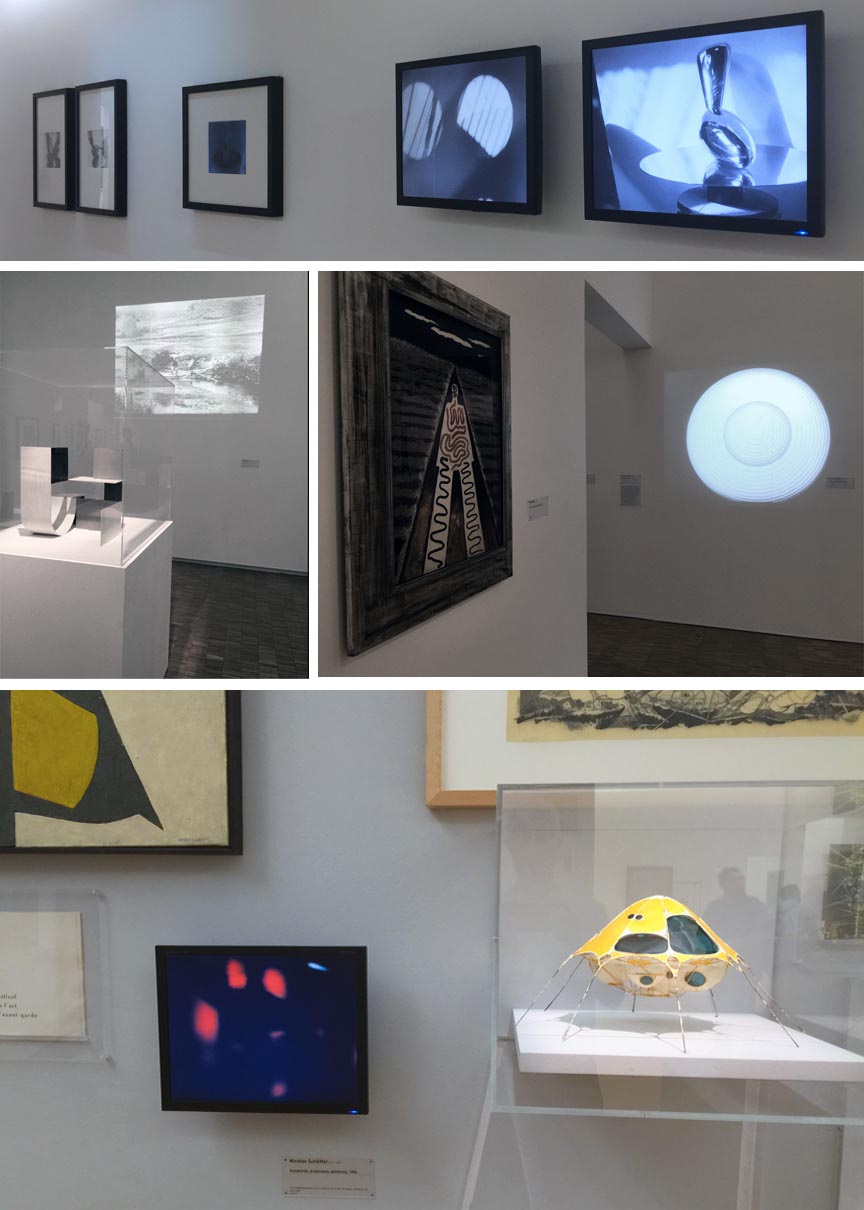
Robert Leonard’s inclusion of film alongside painting, drawing and photography in his exhibition Unseen city at Te Uru is right on the button. He’s also put Leon Narbey together with Laszlo Moholy-Nagy in the City Gallery theatre screening. Mostly art museums have been slow to welcome the history of film into their galleries and so the idea of Len Lye’s films always being on permanent display in major NZ galleries in the same way Colin McCahon or Rita Angus would be is still some way off. Has Vincent Ward’s In Spring one plants alone ever been incorporated into a permanent display of NZ art? Time it was. The Pompidou Centre is ahead of the game in this respect. Most of the topic galleries have film incorporated as part of the display from very Len Lye-looking effort Ballet mecanique by Fernand Leger in 1924 to Marcel Duchamp and Isidore Isou. And the visitors? They just took the mix as the most natural thing in the world.

Images: film as part of the Pompidou's permanent collection display. Left to right top to bottom, Constantine Brancusi and Laszlo Moholy-Nagy, Dziga Verton, Marchel Duchamp and Nicholas Schoffer


Thursday, June 25, 2015

Distance looks our way

You can’t beat the kick of going into a large exhibition space in an international art museum as important as the Pompidou to see a work by an artist you know and admire. This time it was Oscar Enberg in the sixth edition of Un Nouveau Festival titled Air de jeu that dug into the connections between art and games. But we're not talking about some dice and arcade cabinets showcase but games in the big sense. This one's got philosophers, dancers, writers and even OuLiPo and Alighiero Boetti all ‘playing and thinking’ as the Pompidou like to put it. Yes, Enberg is in very good company and also showing alongside another favourite of ours Jonathan Monk.  
Len Lye is in the building too and Peter Robinson’s interactive felt scatter piece has just closed. Then, still hanging in the sky above the square outside Piano & Rogers iconic building, is the ghost of Neil Dawson’s Globe the star of the 1989 Pompidou exhibition Magiciens de la terre 

All this NZ-in-Paris action comes just weeks after seeing Simon Denny knock them dead in Venice.  You’d have to lay a lot of this level of exposure on Creative NZ’s simple focus on success in its international funding. The fact is those Art fairs, exchange programmes, residencies, support for exhibiting off shore and bringing interested curators, writers and bureaucrats to NZ are all starting to make a real impact.

Image: in the foreground Oscar Enberg's work in the exhibition Air de jeu